







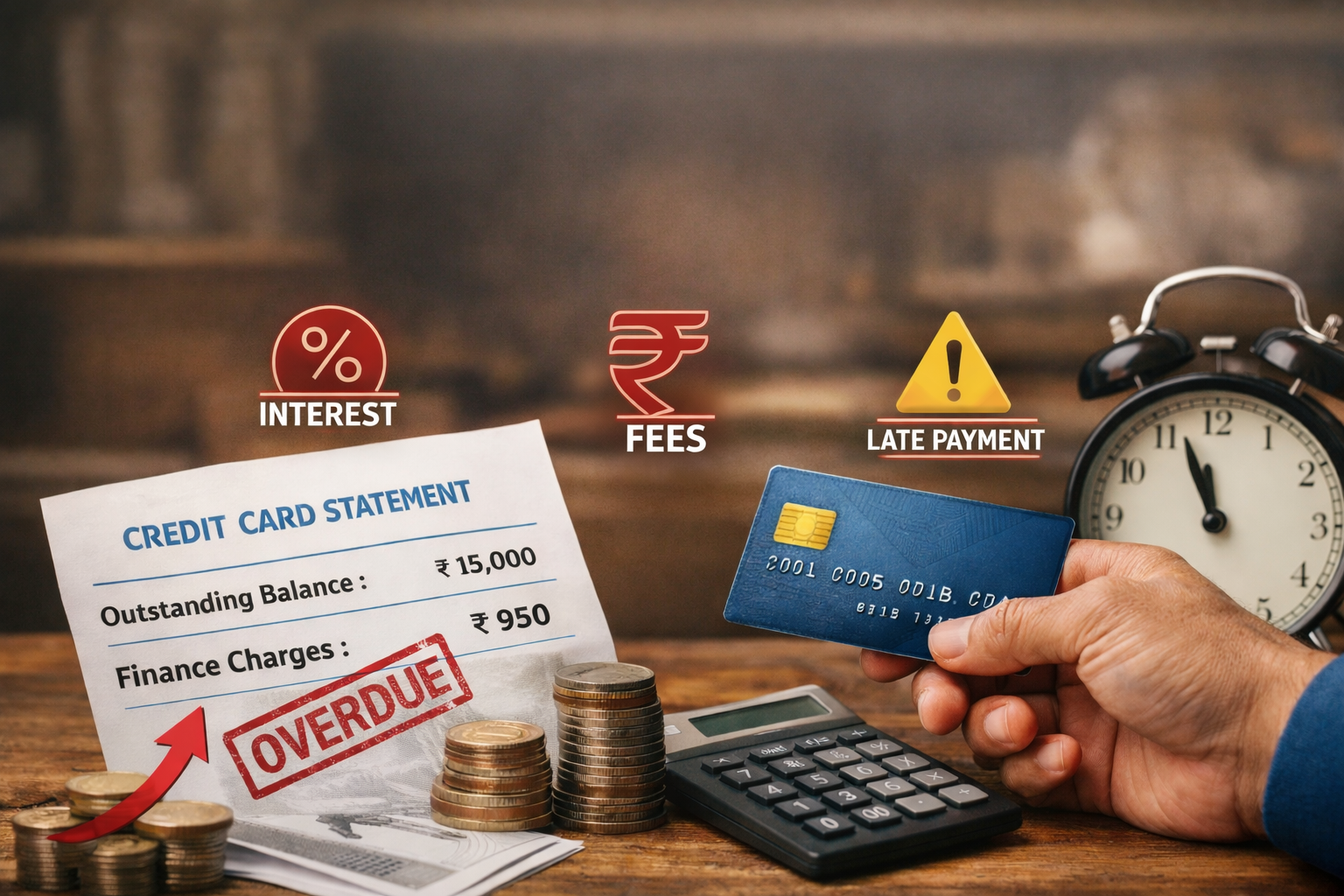
Credit cards make life easy. You swipe now and pay later. But if you are not careful, you may notice extra charges on your bill. These are called finance charges. Many people feel confused when they see this term for the first time.
In simple words, finance charges in credit card are the extra cost you pay when you do not clear your full bill on time. This is basically the interest charged by the bank for borrowing money.
Let’s understand this in a clear and practical way so you can avoid unnecessary charges and manage your credit card smartly.
What Is Finance Charges in Credit Card?
When you use a credit card, the bank gives you an interest-free period. If you pay the full outstanding amount before the due date, you do not pay any extra charges.
But the moment you miss full payment, the bank starts charging interest. This interest is called a finance charge.
For example, suppose your credit card bill is ₹10,000. If you pay only ₹2,000 and leave the rest unpaid, the bank will charge interest on the remaining ₹8,000. That interest is your finance charge.
Why Do Banks Charge Finance Charges?
Banks do not lend money for free. When you delay repayment, they charge interest to cover their risk and cost.
Finance charges exist for three main reasons:
- You did not pay the full outstanding amount
- You missed the payment due date
- You withdrew cash using your credit card
Once any of these happen, the interest starts accumulating daily. This is why your bill sometimes increases faster than expected.
How Finance Charges Work in Credit Cards
Many users think interest applies only after the due date. That is not fully true.
When you do not pay the full amount, banks remove your interest-free period. Then they charge interest from the transaction date, not the due date.
This is where most people get surprised.
Example to Understand Clearly
Let’s say:
- You spend ₹15,000 on 1st March
- Your billing date is 25th March
- Due date is 10th April
If you pay the full amount by 10th April, no problem.
But if you pay only ₹5,000, interest will apply on ₹10,000 from 1st March itself, not from April.
This is how finance charges grow silently.
How Finance Charges Are Calculated
Banks usually calculate interest daily. The rate looks small per day, but it becomes large annually.
Most Indian credit cards charge around 30% to 45% per annum.
Basic Formula
Finance Charge = Outstanding Amount × Interest Rate × Number of Days
Let’s say:
- Outstanding amount: ₹10,000
- Monthly interest rate: 3%
- Days: 30
You will pay around ₹300 as finance charges for one month.
Now imagine if you keep rolling the balance for months. The amount becomes quite high.
Types of Finance Charges You Should Know
Not all finance charges come from the same source. Different actions trigger different charges.
1. Interest on Purchases
This is the most common type. It applies when you do not pay your full bill.
2. Cash Withdrawal Charges
When you withdraw cash from an ATM using your credit card, interest starts immediately. There is no interest-free period.
3. Late Payment Charges
If you miss the due date completely, the bank adds a penalty plus interest.
4. Balance Transfer Charges
If you transfer your outstanding to another card, some banks charge a fee or interest.
Difference Between Interest and Finance Charges
Many people think both are the same. They are related but slightly different.
Interest is a part of finance charges. Finance charges may include:
- Interest
- Late payment fees
- Processing charges
So, finance charges are a broader term.
What Happens If You Only Pay Minimum Amount?
Credit cards allow you to pay a minimum amount, usually 5% of the total bill. This looks convenient but it can be risky.
When you pay only the minimum amount:
- Interest applies on the remaining balance
- New purchases also lose interest-free benefit
- Debt keeps increasing slowly
Over time, you may end up paying much more than what you spent.
How to Avoid Finance Charges in Credit Card
You do not need to be a finance expert to avoid these charges. Just follow a few simple habits.
Smart Ways to Stay Safe
- Always pay the full outstanding amount before the due date
- Avoid withdrawing cash using your credit card
- Track your spending regularly
- Set auto-pay to avoid missing deadlines
These small steps can save you a lot of money every month.
Common Mistakes That Lead to High Finance Charges
Many people fall into the same trap again and again. Let’s look at some real-life mistakes.
Ignoring the Billing Cycle
People focus only on the due date. But your billing cycle also matters because interest may apply from the transaction date.
Using Multiple Credit Cards
Managing multiple cards becomes confusing. You may miss payments unknowingly.
Spending Without Planning
Credit cards give a false sense of extra money. Overspending leads to bigger bills and higher interest.
Not Reading Statements
Your monthly statement clearly shows finance charges. Ignoring it can cost you later.
Finance Charges on EMI Transactions
When you convert a purchase into EMI, the bank may charge interest or processing fees.
Some offers say “No Cost EMI”. But in reality, the interest is often adjusted in the price or discount.
Always check:
- Effective interest rate
- Processing fees
- Total payable amount
This helps you understand the real cost.
Impact of Finance Charges on Your Financial Health
Finance charges may look small at first, but they can damage your finances over time.
If you keep rolling your balance:
- Your debt increases
- Your savings reduce
- Your financial stress grows
It can also affect your credit score if you delay payments regularly.
Tips to Manage Credit Card Interest Better
Managing credit card interest is all about discipline.
Start by treating your credit card like a debit card. Spend only what you can repay.
Keep your credit utilisation below 30%. This not only reduces your interest burden but also improves your credit profile.
If you already have a high outstanding, consider:
- Paying more than the minimum amount
- Avoiding new purchases
- Converting large dues into EMI for better control
Related Keywords You Should Know
To understand this topic better, you may also come across these terms:
- credit card interest rate India
- how credit card interest works
- minimum due credit card meaning
- credit card billing cycle explained
- how to avoid credit card interest
These are closely connected to what is finance charges in credit card and help you build a complete understanding.
FAQs
What is finance charge in simple words?
Finance charge is the extra money you pay as interest when you do not pay your full credit card bill on time.
When are finance charges applied?
Finance charges apply when you carry forward your balance, miss the due date, or withdraw cash using your card.
Can I avoid finance charges completely?
Yes, you can avoid them by paying your full bill before the due date every month.
Is minimum payment enough to avoid charges?
No, minimum payment avoids late fees but not interest. Finance charges still apply on the remaining amount.
Do finance charges affect credit score?
Indirectly, yes. If you delay payments or carry high balances, your credit score may drop.
Final Thoughts
Credit cards are powerful financial tools if you use them wisely. But ignoring finance charges can turn convenience into a burden.
Now that you clearly understand what is finance charges in credit card, you can take better control of your spending. The key is simple—pay your full bill on time and avoid unnecessary debt.
Take Control of Your Credit Today
If you want to save money and build a strong financial future, start managing your credit card smartly from today. Review your latest statement, clear your dues, and plan your next spend carefully.


