
Real-world asset tokenization is changing how businesses approach ownership, investment, fundraising, and asset management. From real estate and private credit to commodities and financial instruments, blockchain technology enables eligible real-world assets to be represented through digital tokens.
As businesses increasingly explore this opportunity, partnering with an experienced RWA tokenization development company can provide the technical infrastructure needed to launch a secure and scalable tokenization ecosystem.
Shamlatech offers custom RWA tokenization development solutions that help businesses transform traditional assets into blockchain-based digital representations while supporting investor management, smart contracts, wallets, marketplaces, and other essential platform components.
What Is RWA Tokenization?
RWA tokenization is the process of creating blockchain-based digital tokens that represent ownership, economic interests, or other rights connected to real-world assets.
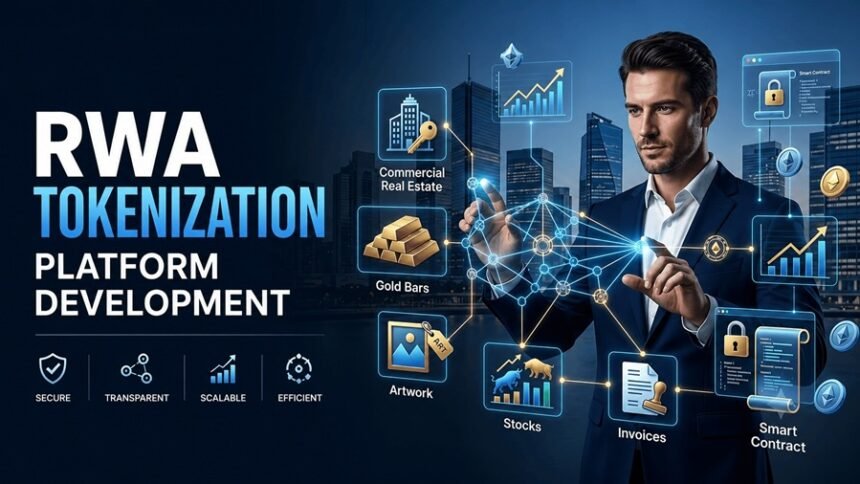
The underlying asset could include real estate, precious metals, commodities, private credit, artwork, funds, or other assets that can legally and operationally be represented through a tokenized structure.
For example, a property can be divided into digital tokens representing fractional interests. Instead of maintaining ownership records entirely through traditional systems, the tokenized structure can use blockchain infrastructure to record and manage digital ownership.
The exact rights associated with a token depend on the legal structure, asset type, jurisdiction, and regulatory framework.
Why Businesses Are Exploring RWA Tokenization
Traditional asset markets can involve complex ownership structures, lengthy settlement processes, intermediaries, and relatively high barriers to participation. Tokenization aims to modernize some of these processes through blockchain technology.
Tokenization can enable fractionalization, allowing certain assets to be divided into smaller units. It can also provide programmable ownership rules, transparent transaction records, and automated workflows.
For businesses, this creates opportunities to develop new investment products, improve asset administration, and build digital marketplaces around previously illiquid or traditionally managed assets.
RWA Tokenization Development Services by Shamlatech
Shamlatech develops customized RWA platforms based on the requirements of asset owners, financial businesses, investment firms, startups, and enterprises.
Custom RWA Tokenization Platform
A custom tokenization platform can provide the infrastructure required to onboard assets, create tokens, manage investors, process transactions, and monitor digital holdings.
The platform can be designed around the specific asset class and business model rather than forcing the project into a predefined structure.
Real Estate Tokenization
Real estate tokenization can convert eligible property interests into blockchain-based tokens. Shamlatech can develop platforms for commercial properties, residential projects, rental assets, land, and other real estate use cases.
Features can include property listings, token issuance, investor dashboards, ownership tracking, wallet integration, and transaction management.
Private Credit Tokenization
Private credit is another important RWA use case. Businesses can create platforms for representing eligible private credit opportunities through digital tokens.
Smart contracts can support predefined processes involving token issuance, transfer rules, payment schedules, and investor records, subject to the legal and regulatory design of the product.
Commodity Tokenization
Commodities such as gold, silver, agricultural products, and other eligible assets can potentially be integrated into tokenization ecosystems.
A commodity tokenization solution can connect digital tokens with underlying assets through appropriate custody, verification, valuation, and asset-management processes.
Security Tokenization
Security tokenization involves blockchain-based representations of regulated financial interests. These platforms generally require more sophisticated compliance and transfer-control mechanisms.
Shamlatech can develop functionality such as whitelisting, permission-based transfers, investor verification, token issuance, and automated compliance-oriented controls based on the project’s requirements.
Core Components of an RWA Tokenization Platform
A successful RWA ecosystem requires several technical components working together.
Asset Management Module
The asset management module allows administrators to register tokenizable assets and maintain important information such as asset details, valuation, documentation, ownership structure, and token allocation.
Token Issuance System
The token issuance system handles token creation, supply management, distribution, allocation, and ownership records.
Businesses can define token economics and transfer mechanisms according to their specific asset and business model.
Smart Contract Infrastructure
Smart contracts provide programmable rules for tokenized assets. They can control issuance, transfers, access permissions, supply limits, and other predefined functions.
Smart contracts should undergo extensive testing and security review before production deployment.
Investor Dashboard
An investor dashboard can allow eligible users to view their portfolios, token balances, transactions, asset information, and relevant documentation from a centralized interface.
Wallet Integration
Wallet integration enables users to hold and interact with tokenized assets. Depending on the platform architecture, businesses can support external Web3 wallets or provide integrated wallet functionality.
Compliance Layer
RWA platforms often require identity verification, investor eligibility checks, transaction restrictions, and other compliance mechanisms.
The compliance layer can be customized based on the asset type, jurisdiction, and regulatory requirements applicable to the project.
RWA Marketplace
Businesses can extend their tokenization platform into a marketplace where eligible users can discover and transact in tokenized assets.
Marketplace functionality can include asset discovery, token purchases, order management, transaction history, and portfolio tracking.
How RWA Tokenization Development Works
The development process starts with defining the asset and determining how it should be represented digitally.
The business model is then translated into a tokenization architecture. This includes determining the token type, blockchain network, ownership structure, transfer rules, investor requirements, and platform functionality.
Once the architecture is finalized, smart contracts and platform components are developed. Frontend interfaces, APIs, wallets, dashboards, databases, and third-party integrations are connected to the blockchain infrastructure.
Testing is performed across the platform to identify functional, security, and performance issues. Smart contracts receive additional testing because vulnerabilities can create significant financial and operational risks.
After deployment, the platform can be monitored and upgraded as the business expands or requirements change.
Benefits of Working with an RWA Tokenization Development Company
Working with a specialized development company can reduce the technical complexity involved in building a blockchain-based asset platform.
An experienced team can help with blockchain selection, smart contract architecture, token standards, wallet integration, platform security, backend development, and user-interface design.
This allows businesses to focus on their asset strategy and market positioning while the technology infrastructure is developed around their requirements.
Advantages of RWA Tokenization
Fractionalization
Tokenization can divide certain assets into smaller digital units, potentially allowing eligible investors to gain exposure to assets that traditionally require significant capital.
Transparency
Blockchain networks can provide tamper-resistant transaction records and improve visibility into token ownership and transfers.
Programmability
Smart contracts allow predefined rules and processes to be automated within the tokenization infrastructure.
Operational Efficiency
Digital workflows can reduce manual processing in selected areas of asset administration and transaction management.
New Market Opportunities
Tokenization can enable businesses to develop new digital investment products, marketplaces, and asset-management models.
Blockchain Technology for RWA Tokenization
Blockchain selection is an important technical decision for an RWA project. Factors such as scalability, transaction costs, smart contract capabilities, ecosystem maturity, interoperability, security, and the requirements of the asset should be considered.
Depending on the project, an RWA platform can use networks such as Ethereum, Polygon, BNB Chain, Avalanche, Arbitrum, or another suitable blockchain.
Shamlatech can help businesses evaluate blockchain infrastructure and select an approach aligned with their technical and business requirements.
Security Considerations for RWA Platforms
Security is particularly important for tokenization platforms because they can manage valuable digital assets and sensitive user information.
A secure architecture should incorporate appropriate authentication, authorization, wallet security, encryption, API protection, monitoring, and access controls.
Smart contracts should also be tested thoroughly and independently audited where appropriate.
Businesses should not treat blockchain deployment as the final security step. Continuous monitoring and maintenance are important for identifying and addressing emerging vulnerabilities.
Regulatory Considerations for RWA Tokenization
RWA tokenization is not purely a technology project. The legal structure behind the token is equally important.
Depending on the asset and jurisdiction, a token may be subject to securities, investment, financial-services, property, commodities, taxation, or other regulations.
Businesses should establish the legal rights represented by the token, investor eligibility requirements, custody arrangements, transfer restrictions, and compliance obligations before launching the platform.
Technology can implement compliance rules, but it cannot replace legal and regulatory advice.
Why Choose Shamlatech?
Shamlatech provides blockchain development expertise for businesses looking to build customized tokenization ecosystems.
The development approach can cover the complete technology stack, including tokenization architecture, smart contracts, backend infrastructure, user interfaces, wallet integration, investor dashboards, marketplace functionality, and third-party integrations.
The platform can also be designed for scalability so businesses can add new asset categories, investors, blockchain networks, and platform features as their ecosystem grows.
Future of RWA Tokenization
RWA tokenization has the potential to connect traditional financial and physical assets with programmable blockchain infrastructure.
As businesses become more familiar with digital ownership models, tokenization may expand beyond simple fractional ownership toward sophisticated financial products, automated asset servicing, digital marketplaces, and interoperable investment ecosystems.
However, adoption will depend on more than blockchain technology. Regulatory clarity, investor protection, asset custody, liquidity, reliable valuation, and strong market infrastructure will remain critical to the success of RWA platforms.
Build an RWA Tokenization Platform with Shamlatech
Launching an RWA project requires a combination of blockchain technology, secure infrastructure, asset management, and a well-defined legal and business model.
As an RWA tokenization development company, Shamlatech helps businesses develop customized platforms for tokenizing eligible real estate, private credit, commodities, securities, and other real-world assets.
From smart contract development to complete tokenization platforms and RWA marketplaces, Shamlatech can provide the technology required to turn a tokenization concept into a scalable digital asset ecosystem.