


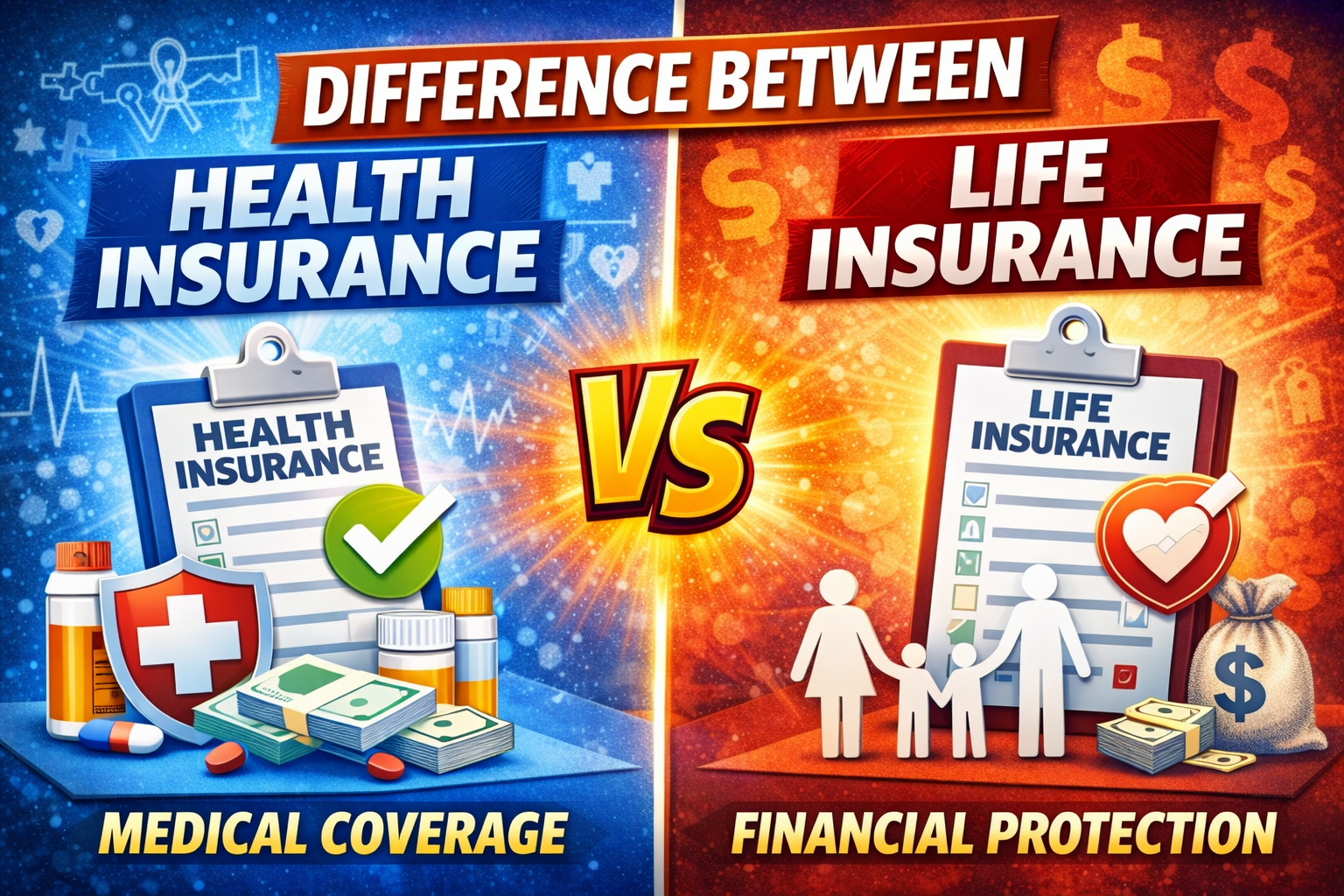
In today’s uncertain environment, insurance has become an essential component of financial planning. However, with multiple options available, individuals often find themselves confused between health insurance and life insurance. Both serve very different purposes, and choosing the right one depends largely on personal circumstances, responsibilities, and long-term goals.
Understanding the difference between health insurance and life insurance is the first step in making a well-informed decision. While both offer protection, they cater to different risks—life insurance secures your family’s financial future in the event of your untimely demise, whereas health insurance provides financial assistance during medical emergencies.
This article outlines the key differences between these two vital financial instruments, their unique features, and why consulting an expert can help align your coverage with your individual needs.
What is health insurance
Health insurance is a policy that covers the cost of medical expenses incurred due to illness, injury, or hospitalisation. Policyholders can claim benefits for doctor visits, diagnostic tests, surgeries, pre- and post-hospitalisation, and even preventive care depending on the policy chosen.
There are various types of health insurance plans available in 2025, including:
- Individual health insurance
- Family floater plans
- Senior citizen health policies
- Critical illness cover
- Personal accident insurance
- OPD and maternity add-ons
Most health insurance policies offer cashless claim settlement at network hospitals, thereby easing the financial burden during medical treatment.
What is life insurance
Life insurance is a policy that provides a financial payout to the nominee in case of the policyholder’s death. It serves as an income replacement tool for dependents and is particularly crucial for individuals with family responsibilities or liabilities like loans.
Popular types of life insurance include:
- Term insurance (pure protection)
- Whole life insurance
- Endowment plans
- Unit-linked insurance plans (ULIPs)
- Money-back policies
Life insurance policies often come with tax benefits and long-term savings components, making them a dual-purpose investment.
The key difference between health insurance and life insurance
While both forms of insurance provide financial security, the difference between health insurance and life insurance lies in their core objective.
| Feature | Health Insurance | Life Insurance |
| Purpose | Covers medical expenses | Provides financial support after death |
| Benefit Type | Reimbursement or cashless hospital bills | Lump sum death benefit to nominee |
| Event Trigger | Illness, injury, hospitalisation | Death of the insured |
| Tenure | Typically annual (renewable) | Long-term (10 years to whole life) |
| Tax Benefits | Section 80D | Section 80C and 10(10D) |
| Survival Benefits | None, unless a wellness reward | Available in some plans |
| Premiums | Based on age and health | Based on age and risk profile |
Choosing between the two depends on what risks you want to cover: immediate medical expenses or long-term financial security for your loved ones.
When to choose health insurance
You should consider prioritising health insurance if:
- You do not have existing medical coverage from your employer
- You are prone to lifestyle-related diseases or have a family medical history
- You are self-employed or a freelancer without group insurance benefits
- You want to safeguard savings from high hospitalisation costs
- You are planning for maternity, senior care, or chronic illness treatment
In such scenarios, health insurance acts as a safety net and prevents the need to dip into emergency funds or savings during medical crises.
When to choose life insurance
Opt for life insurance if:
- You have dependents such as children, spouse, or ageing parents
- You have ongoing financial obligations like EMIs or loans
- You want to leave behind a financial legacy
- You are the sole breadwinner in the family
- You want a long-term tax-saving and wealth-building instrument
The peace of mind that comes from knowing your family is financially secure even in your absence is invaluable.
Why both are equally important
While debating the difference between health insurance and life insurance, many individuals overlook the fact that both are complementary. Health insurance covers immediate and ongoing health risks, while life insurance handles long-term uncertainty.
For complete financial protection, most experts recommend having both:
- Health insurance ensures you are covered for medical emergencies without impacting savings
- Life insurance ensures your family’s lifestyle and goals remain unaffected in case of your demise
In fact, bundling both under a comprehensive financial plan allows for better premium management, tax savings, and peace of mind.
Role of insurance advisors in choosing the right policy
With so many policies, riders, premium structures, and fine print, choosing the right insurance policy can be daunting. An experienced insurance advisor can help by:
- Analysing your income, expenses, liabilities, and goals
- Assessing your risk appetite and dependents’ needs
- Comparing the best market options for both health and life cover
- Suggesting the appropriate sum insured and policy duration
- Ensuring that you are not underinsured or overinsured
Advisors also help in claim management, policy renewals, and guiding you through changes in your life stage that may require updated coverage.
Conclusion
Understanding the difference between health insurance and life insurance is crucial in building a strong foundation for financial security. While they serve distinct purposes, both are essential to protect against life’s unexpected challenges. Health insurance helps you manage present-day health risks, whereas life insurance secures your family’s future in your absence.
Instead of choosing one over the other, consider how each can fit into your overall financial plan. Consulting a qualified insurance advisor will ensure you select the right policies tailored to your unique needs, stage of life, and budget.
