


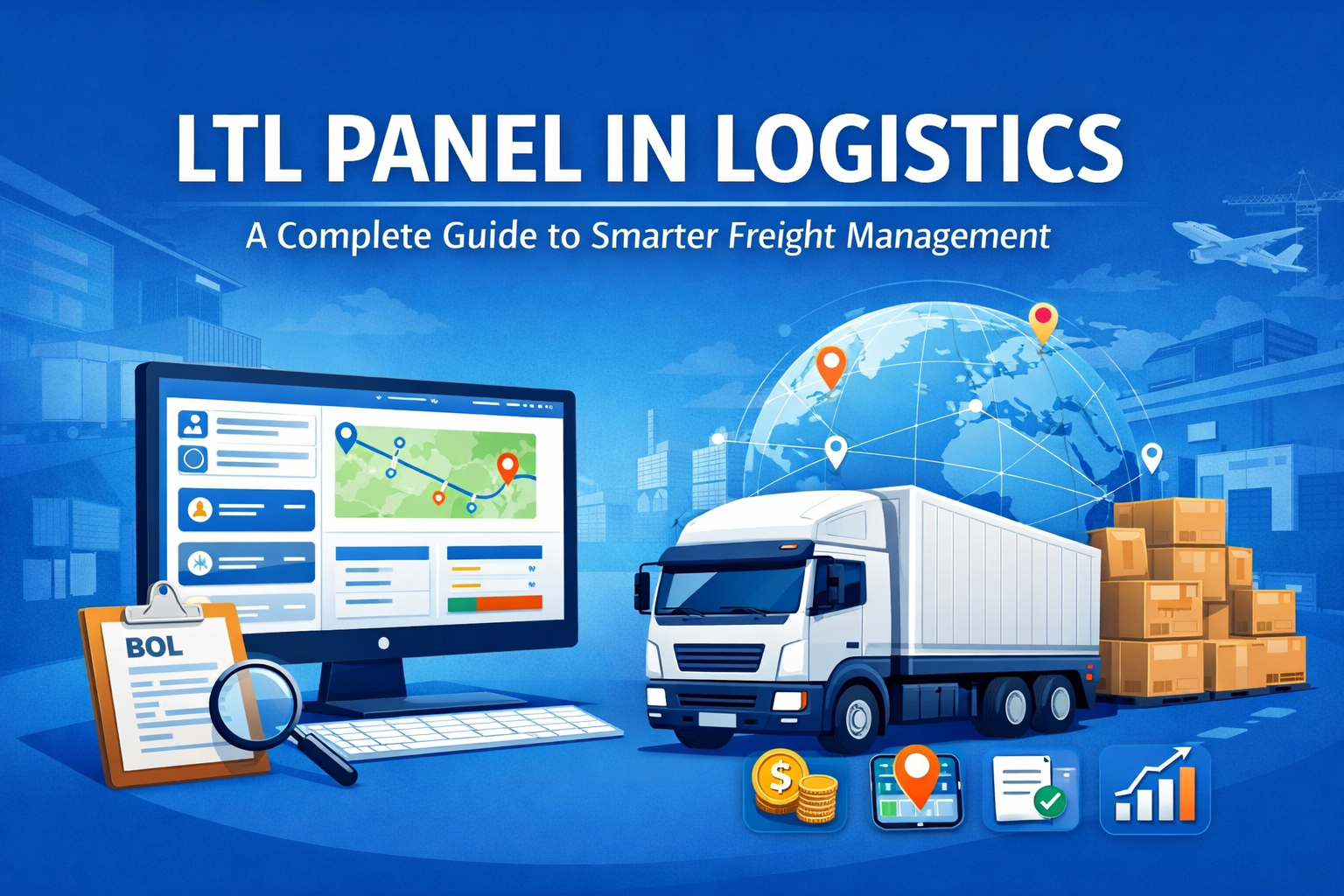
In today’s fast paced world of supply chain and freight management, companies – large and small- are looking for smarter, faster and better ways to transport goods. One of the key tech evolutions facilitating modern-day logistics professionals in their quest to improve their processes, is that of the LTL Panel a digital solution created to simply Less-Than-Truckload (LTL) shipping while providing clear transparency and superior efficiency.
So let’s jump into what an LTL Panel is, what it does and why companies are making it a key part of their logistics playbook.
What Is an LTL Panel?
An LTL Panel is basically a digital dashboard or control center that allows logistics teams and businesses of every size to manage Less-Than-Truckload shipments which, as the name suggests, are big deliveries (freight) that don’t fill up an entire truck bed and gets combined with shipments coming from other shippers.
But it’s no longer feasible to manage interchanges through a network of phone calls, notepads and new trucker spreadsheets; with an LTL Panel, vital tools for freight management are in one place. It simplifies work: booking, tracking, documentation and rate comparison- making teams more productive while cutting costs.
For businesses that ship less-than-truckload quantities regularly, a LTL Panel streamlines the process by automating your quoting process and making it more data-driven and centralized.
LTL Panel Must Haves
Today’s LTL Panels are packed with robust tools to make freight operations easier and more predictable:
1. Real-Time Shipment Tracking
Track your delivery – real time status updates starting from pickup through to your recipient. This transparency also allows businesses to track performance and prepare for any delays or exceptions.
2. Carrier Rate Comparison
Rather than calling multiple carriers one by one, the panel displays rates from a variety of LTL providers all in one place. This enables businesses to determine the most efficient and cost-effective path.
3. Automated Documentation
Bills of Lading (BOLs), invoices, proofs-of-delivery and other important documents are created automatically – without human errors or the need for re-keying data.
4. Freight Cost Optimisation
Advanced analytics allow them to compute total freight spend, compare options, and alter strategies to reduce costs.
5. Dashboard Analytics and Insights
Most panels have friendly dashboards reflecting on the shipment performance and trends, with reports that help in business planning and audits.
Why Use an LTL Panel?
The following is an explanation of how the LTL Panel can revolutionize logistics for companies;
Cost Savings
LTL shipping is a financial win in itself, cutting costs by enabling businesses to pay for only as much of the truck space as they occupy. With the Panel LTL, this saving is even higher with automated rate comparisons on freight optimisation.
Better Visibility
With real-time tracking, there is no guessing about the location of an order and less dependency on manual follow-ups.
Operational Efficiency
Digitalising booking and shipment management cuts down on manual workloads, freeing up logistics teams for other strategic initiatives.
Simpler Documentation
When generating documents automatically, you can expect fewer mistakes, quicker processing times and easier compliance – which is particularly helpful when audited and managing freight claims.
Suitable for SMEs
This allows small to medium-sized businesses to go head-to-head with larger supply chains, as there is no longer a logistics disadvantage in shipping smaller quantities of freight.
How An LTL Panel Works (Step by Step)
Here’s a real-world example of how logistics teams are leveraging an LTL Panel:
1. Input Shipment Details
Add shipment weight, dimension, pick-up and drop-off address.
2. Compare Carriers and Pricing
The panel fetches live rates from several carriers to allow you to pick the most affordable option.
3. Book the Shipment
Select what prices you like and lock it in with the carrier.
4. Generate Documentation
LTL Panels automatically create BOLs and paperwork.
5. Track in Real Time
Track how your shipment is moving along and receive notifications if it’s delayed or in a different status.
6. Audit & Optimise
Analyze the expense and performance data, to make better future shipments.
Example in the Real World: LTL Panel in India
Several logistics service providers such as Delhivery in India, provide an LTL Panel which assists local businesses to place and track less-than-truck-load shipments. These panels house features such as a real-time tracking system, digital documentation, various payment options and bulk shipment management all designed according to the requirements of India’s rapidly scaling SME market.
A platform of this sort further simplifies the processes for companies that are located all over the country from tier 1 to tier 4 cities because there is no intensive manual process to follow when it comes to controlling freight.
Here’s how to Hulk out your LTL panel.
Here are things to bear in mind if you want to make the most of your LTL panel.
- Sync with Your TMS or ERP: No double entry no mistakes.
- Check out freight classes : Accurate freight classification will help you avoid additional costs down the road.
- Audit Your Bills & Rates : Periodic audits can help you catch errors and make sure you’re receiving the best rate.
- Track KPIs : Keep an eye on lead times, carrier performance and cost changes.
The Future of LTL Panels
- As technology advances : LTL Panels are becoming increasingly sophisticated:
- AI Based Route Optimisation : Auto decisions for optimal freight routes.
- IoT Tracking and Sensors: Have better sight as IoT connected asset tracking hardware lets you see where things are.
Blockchain for Documentation – Professional, reliable records and documentation maintained through the supply chainideshow.opendetails Freight Records on Blockchain Enhanced with Trust and Compliance!.
Final Takeaway
An LTL Panel is now more than never a crucial tool in logistics particularly for companies that may not have enough freight to fill an entire truck but still require cost-effective and reliable shipping options. By combining all-round control of rate comparisons, tracking, documentation and analytics in a single digital platform, LTL Panels empower businesses to achieve new levels of efficiency, visibility and control over logistics activity.
Whether you’re a boutique e-commerce seller shipping pallets once a week or a mid-sized manufacturer shipping product around the country, using an LTL Panel as part of your workflow can save you money and improve customer experience.
